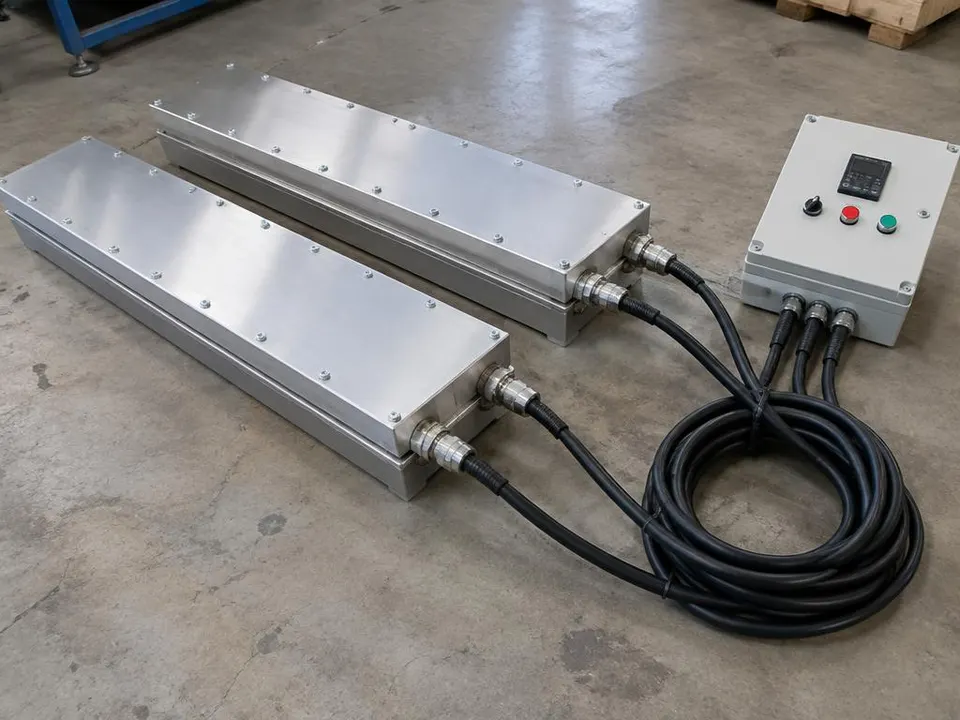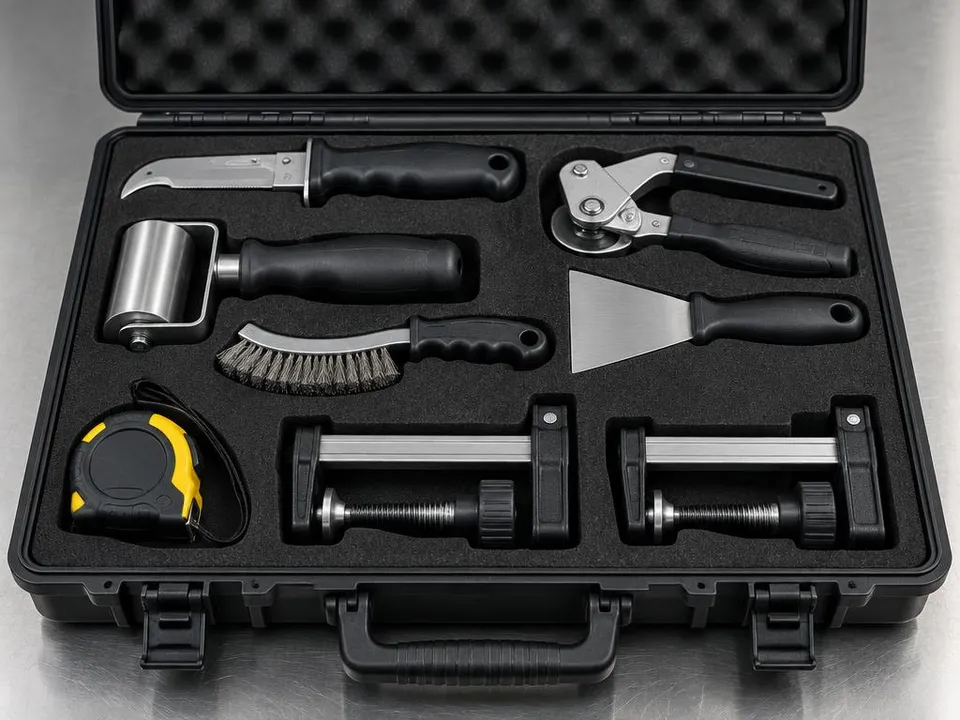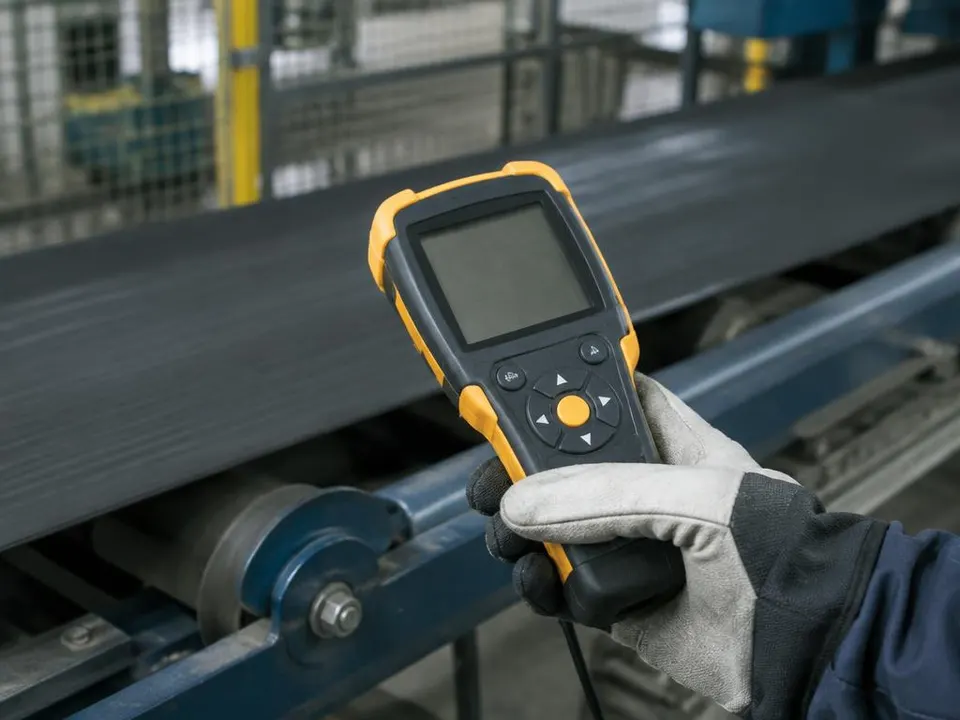
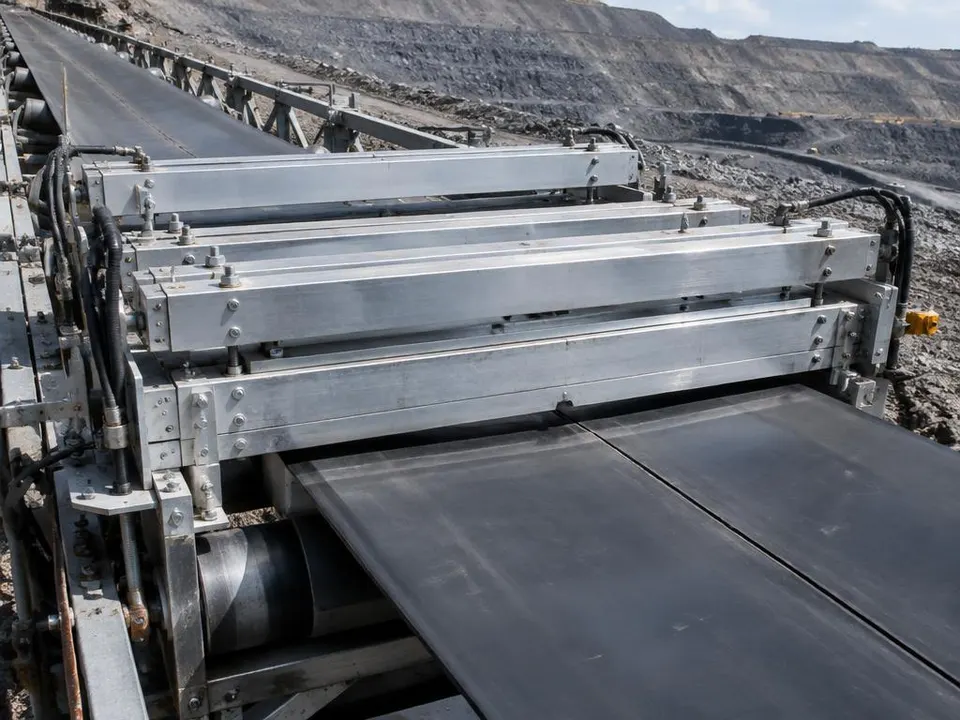
Vulcanisation and belt maintenance determine the service life of a conveyor system. The vulcanising press is used to produce endless hot-vulcanised splices on rubber conveyor belts on site or in the workshop. Press system for endless hot vulcanisation of rubber conveyor belts. In the ABT catalogue the product is listed under the internal reference ABT-VU-001; this reference identifies your enquiry and is not a certified manufacturer part number.
Technical design: Typically constructed from crossbeams, heating platens, pressure bags or mechanical spindles, and a control system for temperature and time. Typical material options include aluminium or steel crossbeams, heating platens and pressure bags. The right combination depends on the conveyed material, operating conditions, environment and the existing plant. Press size and heating capacity are selected according to belt width, splice length, and belt type; technical characteristics are manufacturer-specific.
Key features include endless hot vulcanisation, temperature and cycle time control, modular design and for on-site use. Typical fields of application are mining and quarrying, cement, port facilities and belt servicing. Depending on the process, these environments involve different loads such as abrasion, moisture, temperature, contact with media or changing loads, which should be assessed together during selection.
Configurable options include press width, platen length, pressure generation and control unit. The specific design is agreed per project; ABT states binding dimensions, performance values, certifications or delivery times only after technical clarification and review of the manufacturer documentation. For operators, the benefits lie in high-quality splices, smooth belt tracking and low splice thickness.
A qualified enquiry is helped by details of the conveyed material, throughput, belt width, centre distance, inclination, speed, ambient temperature and existing splice type. Photos of the existing installation, rating plates or drawings make the assessment easier. Safety note: Operate only by trained personnel; observe manufacturer instructions regarding pressure, temperature, and electrical safety.
Across the full life cycle, regular visual inspection of the vulcanising press as part of plant inspection is worthwhile. Wear patterns, contamination, unusual noise or tracking deviations give early indications of required action. Documented maintenance intervals, suitable spare parts and trained staff help to avoid unplanned downtime and protect the investment in the long term.